Don’t miss our deals lists - upto 50% OFF!

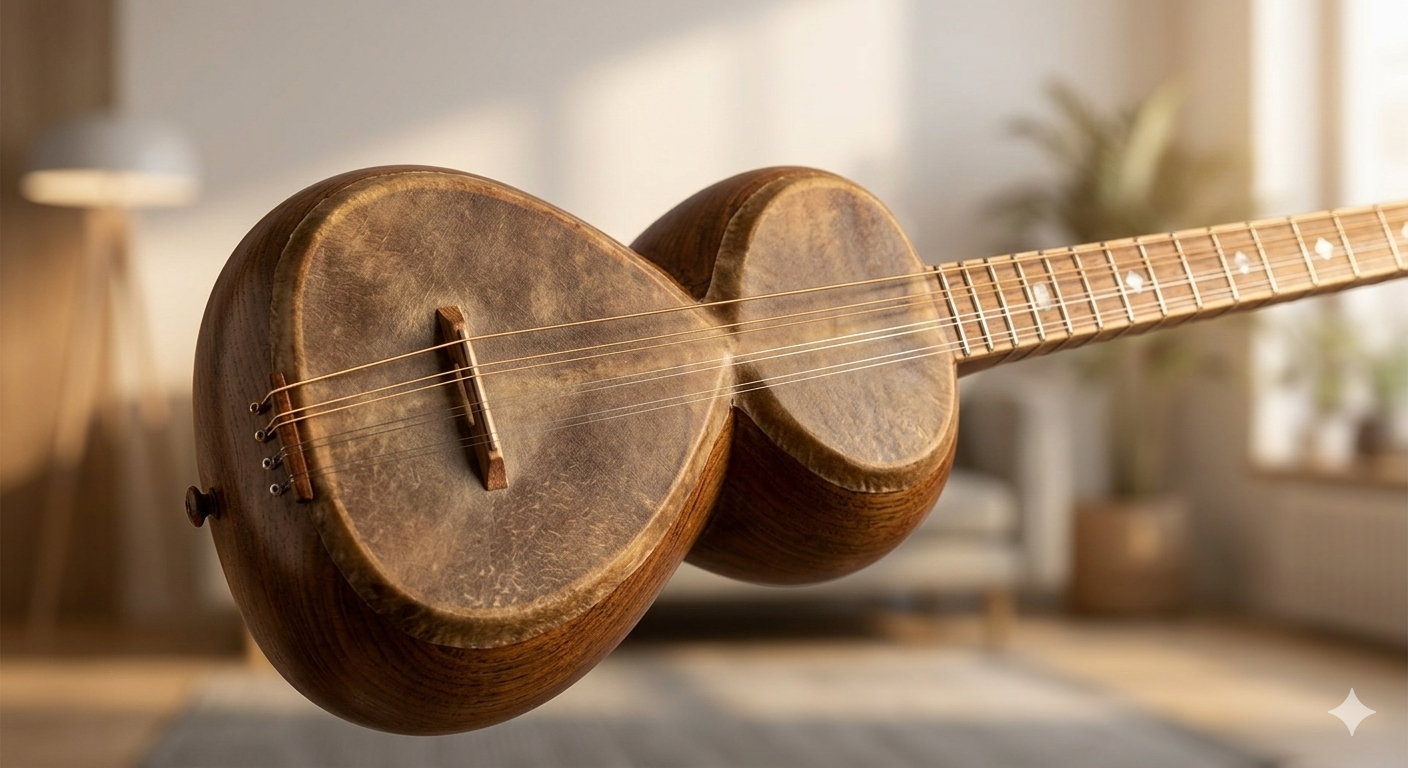
Persian Tar: Feel the Soul of Iran’s Music

If musical instruments had a “Deep Emotions” button, the Persian Tar would definitely be the first one pressed. Often called the “Vessel of Souls,” this double-bowl stringed instrument does more than make music—it tells stories that seem to touch you straight in the heart.
Maybe you’re a young professional tired of the usual lo-fi playlists, or perhaps a tech enthusiast fascinated by the clever engineering behind ancient instruments. Either way, the Tar stands out as both a masterpiece of craftsmanship and a genuine work of art.
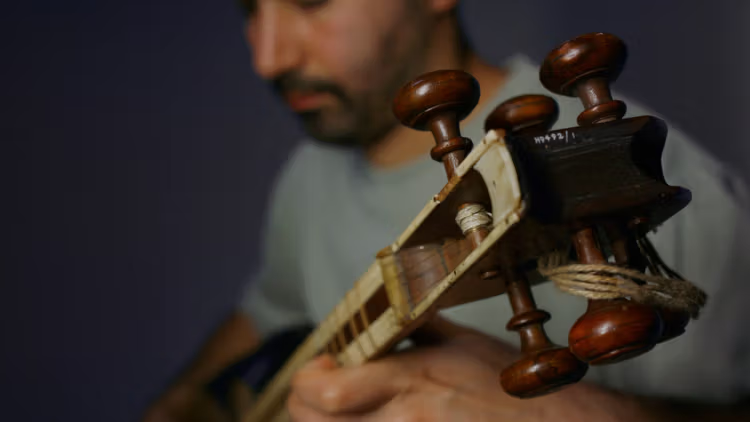
Image source: Hamed Sadegh
Anatomy of a Legend
The Tar’s body is shaped like a figure-eight, carved carefully from mulberry wood. But here’s what really makes it special: the top is covered with a thin layer of lamb embryo skin. This delicate surface gives the Tar a crisp, resonant tone that almost feels human.
A Bridge Through Time
Sure, the Tar’s golden era was during the Qajar period, but it’s far from being “just history.” Today, it thrives in traditional ensembles and modern fusion tracks alike. With six strings and a wide tonal range, it can express everything from deep sorrow to bursts of pure joy.
Why Music Lovers Should Care
- Handcrafted Beauty: Each Tar is unique—no two sound exactly the same.
- Double-Bowl Resonance: That distinct shape produces acoustic richness you just can’t get from a regular guitar.
- Emotional Versatility: It’s central to the Radif (Persian classical repertoire) but also fits perfectly into cinematic or contemporary pieces.
Expert Insight
As modern masters like Hamed Sadegh often point out, playing the Tar isn’t just about skill—it’s about connecting your heartbeat to the vibrations of the strings. It’s immersive, grounding, and a rare escape from the fast pace of today’s digital world.
In my own experience, growing up in Tehran, I once watched an elder musician play the Tar at a small gathering. The sound filled the room like a gentle conversation, and for a few moments, everything else seemed to disappear. That’s when I really felt how deeply this instrument can communicate emotion.
Curious to hear it yourself? The Tar isn’t just a musical instrument—it’s a journey into the heart of Persian culture.
Watch and Listen:
Source
Persian Tar: Feel the Soul of Iran’s Music
Source / Reference: Hamed Sadegh, The Persian Tar: A Living Instrument, Powerhouse
https://powerhouse.com.au/stories/persian-tar#emotions-play-out
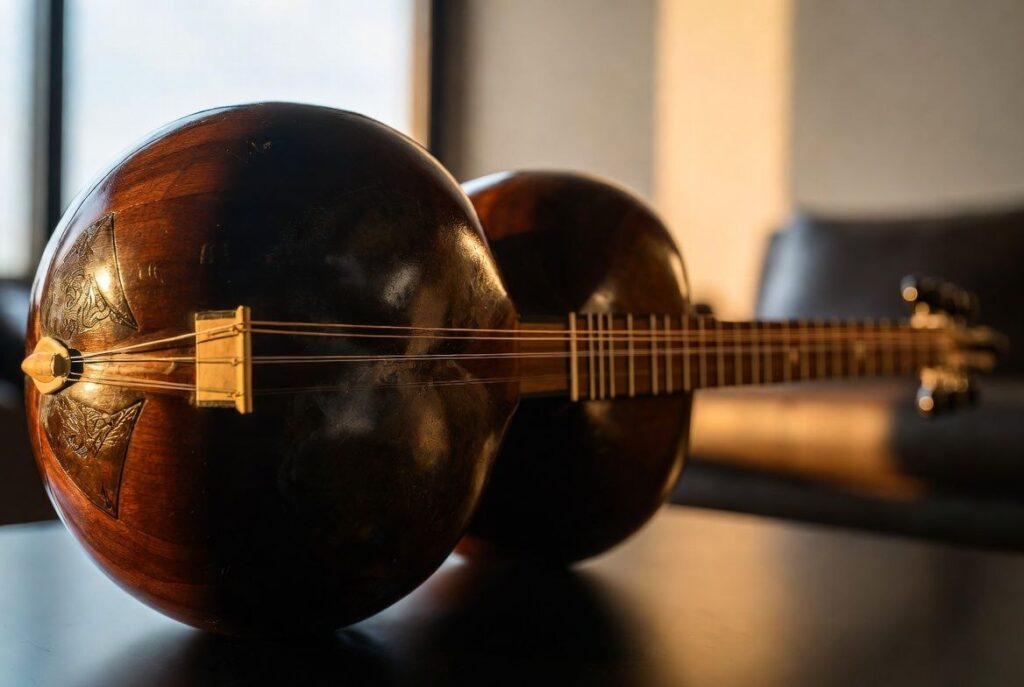
Image generated with AI
تار ایرانی: احساس روح موسیقی ایران
اگر سازها یک دکمه «احساسات عمیق» داشتند، بیتردید تار ایرانی اولین انتخاب بود. این ساز دوکاسه که اغلب «ظرف ارواح» نامیده میشود، فقط موسیقی تولید نمیکند—بلکه داستانهایی روایت میکند که مستقیماً با قلب شنونده ارتباط برقرار میکنند.
ساختار یک افسانه
بدنه تار به شکل هشت طراحی شده و از چوب توت با دقت تراشیده شده است. اما نکته شگفتانگیز آن این است که رویهاش با یک لایه نازک از پوست بره پوشیده شده است. این سطح ظریف، صدای شفاف و رزونانتی به تار میدهد که تقریباً انسانی به نظر میرسد.
پل میان زمانها
اگرچه دوران طلایی تار به دوره قاجار برمیگردد، اما اصلاً فقط «تاریخ گذشته» نیست. امروزه تار هم در گروههای سنتی و هم در موسیقی تلفیقی مدرن حضور دارد. با شش سیم و گستره صوتی وسیع، میتواند هر چیزی را از اندوه عمیق گرفته تا شادی انفجاری منتقل کند.
چرا هر عاشق موسیقی باید تار را بشناسد
- زیبایی دستساز: هر تار منحصر به فرد است و هیچ دو سازی صدای کاملاً یکسانی ندارند.
- رزونانس دوکاسه: شکل خاص آن صدای غنی و طبیعی تولید میکند که گیتارهای معمولی هرگز ندارند.
- عمق احساسی: تار محور «ردیف» موسیقی کلاسیک ایرانی است، اما به راحتی در موسیقی فیلم یا قطعات مدرن هم جای میگیرد.
نظر کارشناسان
به گفته استادان مدرن مانند حامد صادق، نوازندگی تار فقط مربوط به تکنیک نیست—بلکه درباره پیوند قلب نوازنده با ارتعاش سیمهاست. تجربهای عمیق، آرامشبخش و فرار از سرعت زندگی دیجیتال امروز.
تجربه شخصی من
وقتی در تهران بزرگ شدم، یک بار در جمع کوچکی، یک نوازنده مسن تار مینواخت. صدا انگار به شکل یک گفتگوی آرام در فضا پخش میشد و برای چند لحظه، همه چیز دیگر محو شد. همان لحظه بود که فهمیدم این ساز چقدر میتواند با احساسات انسان ارتباط برقرار کند.
کنجکاوید خودتان بشنوید؟ تار فقط یک ساز نیست—بلکه سفری است به قلب فرهنگ ایرانی.
مرجع:
این پست وبلاگ با استفاده از مدلهای زبانی بزرگ و بر اساس چندین مطلب دیگر ایجاد شده است، که مهمترین آنها مقاله: “تار ایرانی: سازی زنده” نوشته حامد صادق در این لینک بوده است
https://powerhouse.com.au/stories/persian-tar.